
Best Solar Structure for Coastal Tamil Nadu: GI vs Hot-Dip Galvanized
When installing solar panels, most homeowners focus on the panels and inverters. However, the mounting structure is the backbone of your entire solar system. It ensures stability, safety, and longevity. A weak structure can lead to panel damage during cyclones or rust issues that compromise the entire setup within a few years.
In Tamil Nadu and Puducherry, homes face unique challenges—strong sun, coastal winds, and high humidity. The quality of your structure directly affects the life of your panels and your warranty. Many homeowners get confused between GI, Hot-Dip, clamp-based, and rail-less options.
At Surya’s Solar, we use only MNRE-approved structures designed to withstand the specific climate conditions of Cuddalore, Panruti, Neyveli, and Puducherry. This guide explains the different types of structures available in 2025 and helps you choose the best one for your home.
Why Solar Structure Quality Matters (TN + Puducherry Conditions)
Your solar system is an investment for 25 years. The structure must last just as long. If the structure rusts or bends, your expensive panels are at risk.
1. Tamil Nadu Climate Challenges
- High Heat: Structures expand and contract with temperature changes. Poor quality metal can warp, causing stress on the glass panels.
- Strong Winds: Especially during the monsoon season (October–December), wind speeds in districts like Cuddalore can exceed 100 km/h. A sturdy structure is non-negotiable.
- Dust Buildup: Proper tilt is needed for self-cleaning during rains.
2. Puducherry Climate Challenges
- High Humidity: Accelerates rust and corrosion.
- Coastal Salt: Salty air eats away at standard iron structures. We have seen standard GI structures rust in just 3 years in coastal Pondicherry.
- Wind Pressure: Coastal zones require higher wind-load resistance calculations.
Types of Solar Structures Explained
Here is a breakdown of the most common mounting systems available in 2025.
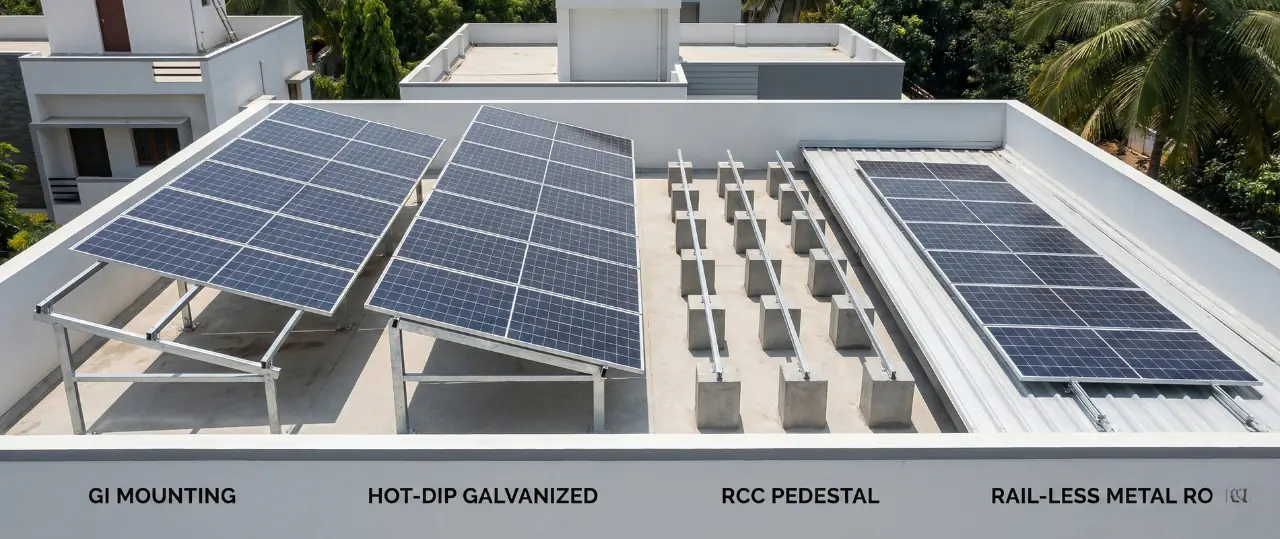
A) GI Structure (Galvanized Iron)
This is the most commonly used structure for budget-friendly installations in inland areas.
- Features: Made of iron coated with a layer of zinc (typically 20-40 microns).
- Pros: Low cost, good strength, easily available.
- Cons: Not ideal for coastal regions; moderate rusting can start after 5–7 years if the coating is thin.
- Best For: Homes in Panruti, Neyveli, and interior Tamil Nadu where salt corrosion is not a major issue.
B) Hot-Dip Galvanized Structure (HDGI)
The gold standard for durability, especially in coastal areas.
- Features: The iron is dipped in molten zinc, creating a thick (80–120 micron) protective layer that bonds chemically with the steel.
- Pros: Excellent anti-rust properties, strong durability (15–25 years), and high wind resistance. It essentially "heals" minor scratches.
- Cons: Higher price (about 10-15% more than GI), heavier structure.
- Best For: Cuddalore, Puducherry, and any home within 10km of the sea.
C) RCC Structure (Civil Foundation / Concrete Pedestal)
Used when drilling into the roof is not an option or for extra stability.
- Features: Uses concrete blocks (pedestals) as a base for the mounting legs.
- Pros: No drilling on the roof (prevents leaks), maximum stability, perfect for flat rooftops.
- Cons: Requires more space, slightly expensive due to civil work, and adds weight to the roof.
- Best For: Large flat terraces in all districts, especially for older buildings where drilling might cause cracks.
D) Rail-Less Structure (Premium, Aesthetic)
A modern trend for metal roofs where aesthetics matter.
- Features: Panels sit low on the roof without long rails, attached directly to the sheet metal ribs.
- Pros: Beautiful modern look, lightweight, less wind resistance (aerodynamic).
- Cons: Not suitable for concrete rooftops, requires higher installation skill.
- Best For: Industrial sheds or homes with metal sheets in Chidambaram or Neyveli.
Comparison Table (2025)
Compare the key features to find the right fit for your home.
| Structure Type | Best For | Corrosion Resistance | Lifespan | Cost Level | Suitable Regions |
|---|---|---|---|---|---|
| GI | Budget installs | Medium | 10–12 yrs | Low | Panruti, Neyveli |
| Hot-Dip GI | Coastal areas | High | 15–25 yrs | Medium | Cuddalore, Puducherry |
| RCC Pedestal | Large rooftops | Very High | 20+ yrs | High | All TN & Pondy |
| Rail-Less | Aesthetic installs | Medium-High | 15 yrs | Medium-High | Metal roofs |
Calculate Your Solar Cost & Choose the Right Structure
Our Solar Calculator helps estimate cost differences between GI, Hot-Dip, RCC, and rail-less mounting.
Solar Savings Calculator Tamil Nadu
Calculate your potential savings with precision
Enter amount between ₹2,000 and ₹30,000 • We specialize in 3 kW+ systems
Which Structure Should You Choose?
Your location plays a big role in this decision. Here is our expert recommendation based on where you live.
Cuddalore & Puducherry (Coastal)
Recommendation: Hot-Dip GI or RCC
- Reason: Corrosion resistance is critical here. Standard GI will rust within a few years due to the salty air. Investing in Hot-Dip ensures your structure lasts as long as your panels (25 years).
Panruti, Neyveli (Dry Areas)
Recommendation: GI or RCC
- Reason: Less corrosion risk allows for standard GI, which saves money. However, strong winds still require a sturdy foundation, so ensure the gauge (thickness) of the steel is sufficient.
Chidambaram (Mixed Weather)
Recommendation: GI or Rail-Less
- Reason: If you have a metal roof, rail-less is a great option for a sleek look. For concrete roofs, GI works well, but regular maintenance (painting) might be needed after 10 years.
Chennai (Wind + Humidity)
Recommendation: HDGI or RCC
- Reason: Similar to Puducherry, the combination of wind and humidity demands a robust, rust-proof structure.
Wind Speed & Structural Safety (TN Building Codes)
Safety is non-negotiable. A solar system is a large sail; if not secured properly, it can fly off during a storm.
- Coastal Zones: Require stronger foundations to withstand high wind speeds. We design for 180 km/h wind loads in coastal belts.
- BIS Standards: Structures must withstand 150–180 km/h winds as per IS 875 standards.
- Compliance: Hot-dip structures comply with MNRE specs for safety.
- Commercial: RCC is best for large commercial rooftops to ensure stability without puncturing the roof membrane.
Structure Height Options
You can choose the height of your solar structure based on your needs.
1. Low-Height (100–300mm)
- Design: Panels sit close to the roof.
- Pros: Best for wind resistance (less drag), cheaper.
- Cons: Harder to clean under the panels.
2. Standard Height (500–1000mm)
- Design: The most common choice.
- Pros: Allows for air circulation (cooling the panels) and easy cleaning.
- Cons: Standard cost.
3. Elevated Structure (2–3 meters / High Rise)
- Design: Raises the panels high enough to walk under.
- Pros: You reclaim your roof space! You can use the area underneath for drying clothes, a terrace garden, or even a small party area.
- Cons: Significantly more expensive (approx. ₹15,000 – ₹25,000 extra per kW) due to extra steel, heavy pillars, and wind bracing requirements.
Surya’s Solar Installation Quality
We don't compromise on the bones of your system.
- BIS-Certified: We use only certified steel structures (JSW / Tata Steel).
- Anti-Rust Fasteners: All nuts and bolts are Stainless Steel (SS304) to prevent rust. Using normal iron bolts is a common mistake that leads to failure.
- Proper Grounding: Every structure is earthed to protect against lightning strikes.
- Wind-Load: We calculate the wind load for your specific location before installation.
- Wire Routing: Cables are routed neatly through UV-protected conduits, not left hanging loose.
- Guarantee: We offer a 20-year structural safety guarantee.
Frequently Asked Questions (FAQs)
Frequently Asked Questions
How far from the coast do I need salt-resistant panels?
Can I upgrade my existing structure to galvanized?
How do I know if my panels have coastal certification?
Is aluminium better than galvanized steel?
Can salt damage already installed panels?
Need Help Choosing the Right Solar Structure?
Surya’s Solar provides roof assessment and recommends the safest structure for your home in Tamil Nadu & Puducherry. Whether you need a standard mount or a high-rise structure, we have the expertise.
Get a Free Rooftop Assessment
Our engineers will visit your site, analyze shadow-free area, and provide a detailed solar report.
Book Free AssessmentTags
Ready to Switch to Solar?
Get a customized solar solution for your home. Save up to 90% on electricity bills!
- Free Site Visit
- Govt. Subsidy Support
- 25 Years Warranty