
Solar Maintenance Guide 2026: How to Clean Panels & Maintain Efficiency
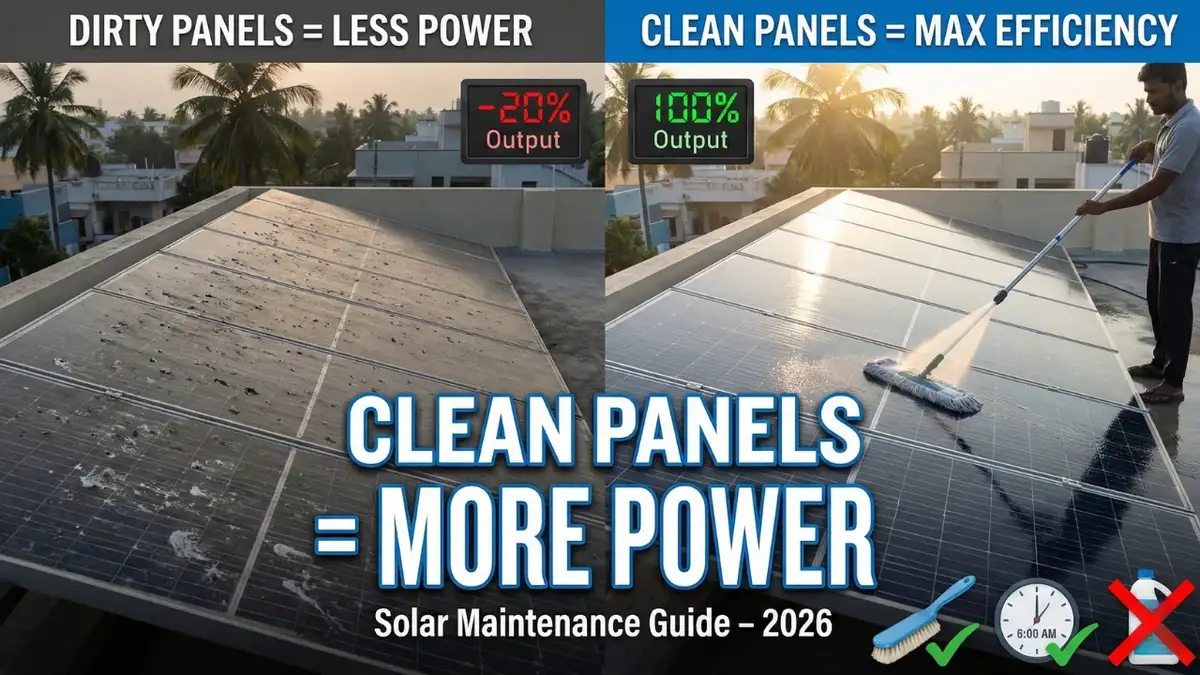
"Sir, are these panels 'Self-Cleaning'?"
We hear this question often. The honest answer is: No. While occasional rain helps, it rarely cleans the sticky dust layer that forms in Cuddalore's humid, coastal climate. The salt in the air mixes with dust to form a grime layer that feels almost like cement.
In 2026, the biggest reason for "Low Generation" complaints isn't faulty inverters or bad wiring—it is simply Dust.
A dirty solar panel is like a dirty car windshield. If light can't get in, power can't get out. Field studies in Tamil Nadu show that a thick layer of dust can reduce your solar output by 15% to 25%.
- The Math: If a 3kW system loses 20%, you lose 3 to 4 units every single day.
- The Loss: That is approx ₹24/day = ₹8,500 lost per year.
Here is the definitive maintenance guide to keep your plant running at 100% efficiency for 25 years.
1. The Maintenance Calendar (Cuddalore Edition)
Depending on the season, your cleaning schedule must change. Cuddalore has three distinct dust seasons.
| Season | Months | Dust Level | Cleaning Frequency |
|---|---|---|---|
| Summer | Mar - Jun | EXTREME | Every 7 - 10 Days |
| Monsoon | Oct - Dec | Low (Rain helps) | Once a Month |
| Winter | Jan - Feb | Moderate | Every 15 Days |
Best Time to Clean:
- Early Morning (6 AM - 8 AM): This is the Golden Hour. Panels are cool from the night.
- Late Evening (5 PM - 7 PM): Acceptable, but you might lose daylight visibility.
- Danger Zone: NEVER clean panels in the hot afternoon (11 AM - 3 PM). The glass can reach 60°C - 70°C. Pouring cold water on hot glass causes Thermal Shock, which can shatter the tempered glass instantly.
2. The Science of Water Quality (TDS Warning)
This is the most common mistake homeowners make. Can I use bore water? It depends on the TDS (Total Dissolved Solids).
- Bore Water (>500 ppm): NO. Cuddalore bore water is often hard (salty). If you let it dry on the glass, it leaves white calcium spots ("Scale"). These spots are permanent and block sunlight.
- RO Reject Water: YES. If you have an RO purifier, the reject water is perfect for cleaning (ironically, it often has fewer scaling minerals than raw bore water in some stages, but ideally use Soft Water).
- Rain Water: The Best. It has zero TDS.
Pro Tip: If you must use bore water, you MUST use a wiper (squeegee) to remove every drop of water before it dries. If the water is removed, the salt is removed. If the water evaporates, the salt stays.
Contact Service Team for Professional Cleaning
3. The "Do's and Don'ts" of Cleaning
DO:
- Use a Soft Brush/Mop: Use a microfiber mop (like the ones used for car washing). It lifts dust without scratching.
- Use a Squeegee: A rubber wiper blade is your best friend. It leaves the glass streak-free.
- Inspect While Cleaning: Look for bird droppings. Bird poop is acidic and can burn the glass if left for months. Scrub it off gently.
DON'T:
- NO Detergents: Soap, Surf, or Shampoo leaves a sticky microscopic film. This film attracts more dust within 2 days. Plain water is best.
- NO Abrasives: Never use Scotch-Brite, metal scrubbers, or rough cloth. Scratches on the Anti-Reflective Coating (ARC) reduce efficiency permanently.
- NO Pressure Washers: Do not use a high-pressure car washer aimed closely at the panels. The pressure can damage the silicone seals between the glass and frame, causing water ingress and delamination.
4. The DIY Cleaning Kit Checklist
You don't need expensive machines. You just need the right tools found in any hardware store in Manjakuppam.
- Telescopic Pole (3m - 6m): Essential safety tool. It lets you reach the top panels while standing safely on the roof, without climbing onto the structure.
- Microfiber Mop Head: Soft and absorbent.
- Rubber Squeegee: Quality rubber (like Unger) works best.
- Hose Pipe with Spray Gun: Gentle shower setting.
5. The "Health Check" (Every 6 Months)
Cleaning is about generation. Maintenance is about safety. Do a quick visual check every 6 months:
A. Cable Inspection
Look underneath the panels (without touching wires).
- Are any wires hanging loose and touching the roof?
- Are there rat bites? Rats love chewing solar cables.
- Action: If you see damaged wires, DO NOT TOUCH. Call us immediately. Voltage can be lethal even at night.
B. Structure Rust Check
Look for orange spots on the nuts, bolts, and joints.
- Cuddalore's salty air attacks galvanized steel.
- Action: If you see rust, purchase a can of "Cold Galvanizing Zinc Spray" and spray it on the affected area to stop corrosion.
C. Inverter Health
Check the display on your Inverter.
- Green Light (Normal): System is generating.
- Red Light (Fault): Note down the error code (e.g., Error 102) and contact support.
- Generation Check: Compare today's generation with the same day last month. If it's dropped significantly without cloudy weather, something is wrong.
6. Safety First: The Golden Rules
Never compromise your life for a few units of electricity.
- Don't Walk on Panels: Micro-cracks will form invisible to the eye, destroying the panel.
- Wet Roof Hazard: Algae forms on roofs. When wet, it is like ice. Wear anti-slip shoes.
- Electrical Safety: Never clean panels if you see broken glass or exposed wires. Water conducts electricity.
Conclusion: A well-maintained solar plant is a 25-year asset that prints money. Neglect it, and it becomes a liability. Keep it clean, keep it safe.
Need Professional Maintenance Service?
Get annual health checkups for your solar system. We inspect cables, earthing, inverter performance, and panel condition.
Frequently Asked Questions
Which solar panel brand is No.1 in Tamil Nadu?
Which brand is best for Puducherry climate?
Mono PERC vs TOPCon: which is better?
Is Loom Solar good for home use?
What warranty should I look for?
Related Articles
- DC Cable Quality Guide - Check cable health
- Earthing Safety Guide - Ensure proper grounding
- Shadow Analysis Guide - Optimize panel placement
Get a Free Rooftop Assessment
Our engineers will visit your site, analyze shadow-free area, and provide a detailed solar report.
Book Free AssessmentTags
Ready to Switch to Solar?
Get a customized solar solution for your home. Save up to 90% on electricity bills!
- Free Site Visit
- Govt. Subsidy Support
- 25 Years Warranty